What a contractor review covers
Project coordination needs in Vaughan vary with the housing generation, from postwar bungalows to new subdivisions.
- Residential or commercial scope
- Trade ordering and coordination
- Permits, inspections, and site rules
General Contractor in Vaughan
A Markham-based team for Vaughan renovation and fit-out coordination, scoped before pricing.
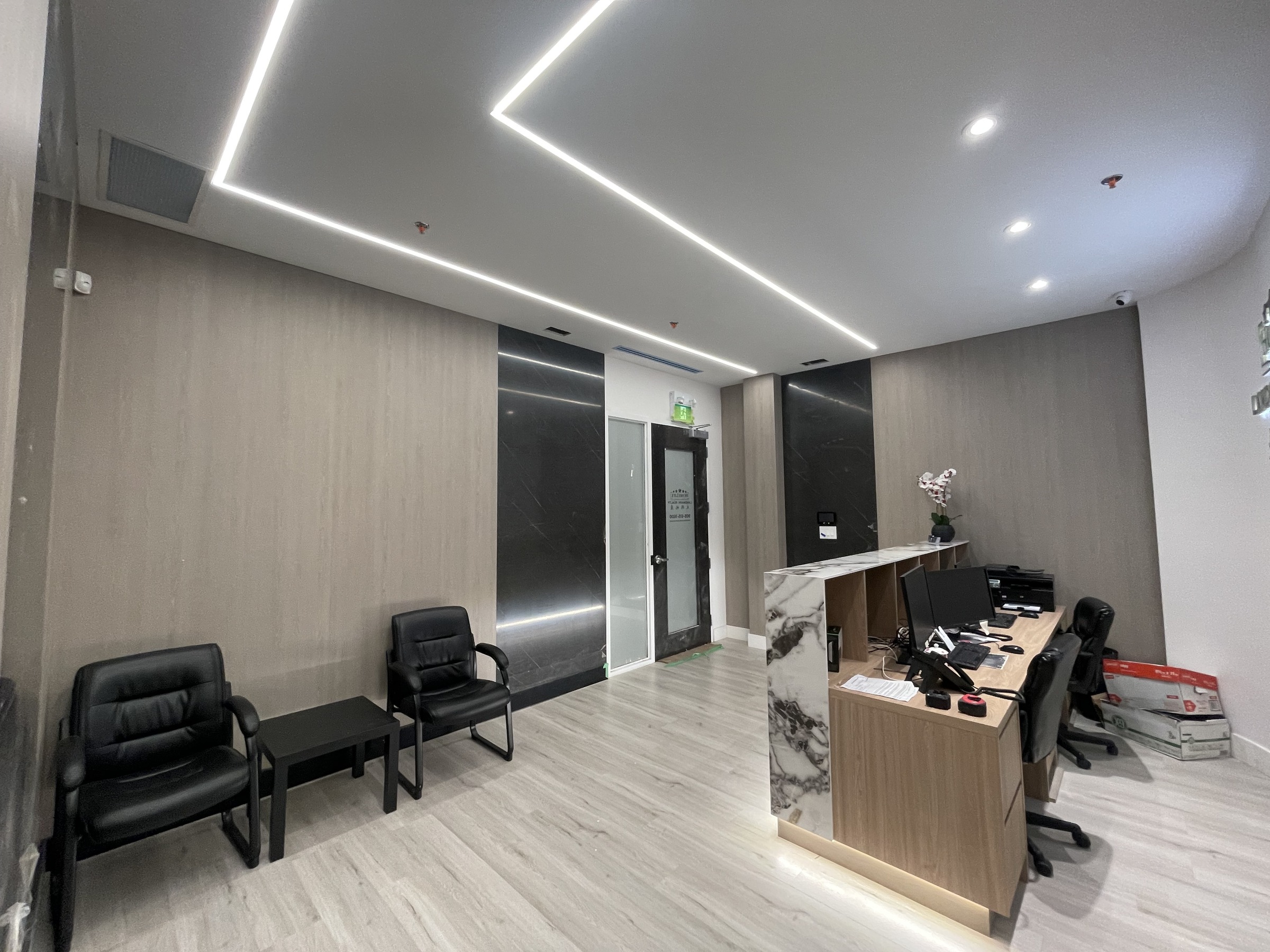 Related case studyBrokerage Office Fit-OutOffice fit-out with a custom reception desk, boardroom, and ceiling feature.
Project coordination needs in Vaughan vary with the housing generation, from postwar bungalows to new subdivisions.
Access, working rules, opening targets, materials, and drawings shape the quote.
A Vaughan quote is comparable when confirmed work, exclusions, allowances, and assumptions are in writing.
Continue exploring
A general contractor is the one who turns a scope into a finished project: coordinating trades, ordering the work correctly, handling permits and inspections, and taking responsibility for the result. In Vaughan that can mean a postwar bungalow renovation in Thornhill, a kitchen and basement program in Maple, or a commercial fit-out in the Vaughan Metropolitan Centre, each with its own coordination demands.
The value of a contractor shows when things go wrong, which is why the review leads with responsibility: who does what, how changes are handled, and how the schedule is protected.
Most renovation work is done by several trades, and the order they work in decides quality and speed. Demolition, structural work, rough-in electrical and plumbing, insulation, drywall, millwork, and finishes each have to follow the previous step cleanly, and a contractor manages those handoffs.
The review covers which trades are involved, who supplies what, and how the schedule accommodates material lead times and inspection points; those details keep a project moving instead of stalling between trades.
Vaughan has heritage neighbourhoods, including historic Woodbridge and parts of Kleinburg, where homes sit under heritage designation and renovation carries extra rules. Alterations to designated properties can require heritage review alongside building permits, and the approach to windows, materials, and exterior changes differs from a house without designation.
If the house is in a heritage area, the question belongs in the first conversation, because knowing the constraints early keeps the design honest and the process smooth, and it is exactly the kind of thing a scope review should surface rather than discover late.
Permits and inspections under the Ontario Building Code apply to structural, electrical, plumbing, and mechanical work, and in Vaughan the city administers them. Commercial spaces add their own rules around occupancy, fire safety, and the landlord's requirements.
Site rules matter too: access, working hours, parking, waste removal, and protecting the space, and the review covers them so the household, the neighbours, and the landlord face no surprises.
Renovations change as they go, and the difference between a smooth project and a difficult one is how the changes are handled: what is included, what is an extra, and who approves it before it happens. Clear change rules in the written scope protect both sides.
Inclusions, exclusions, allowances, and assumptions are agreed before pricing, and that discipline keeps the final number close to the quoted one.
The cost drivers are the same everywhere: scope, finish quality, the mechanical and structural work behind the surface, site access, and schedule management. Unknown conditions are why honest contractors inspect before quoting firm numbers.
When a range cannot be given confidently, the deciding factors are stated rather than invented, and the written quote separates confirmed work from everything that still needs a decision.
The shape of the team belongs in the review. A renovation may be delivered by the same people from start to finish, or the contractor may manage specialist trades who come and go; knowing who does what, who stands behind each part of the work, and who to call when something needs attention is part of a clear scope.
Reporting is as important as the work itself. A weekly summary of what happened, what is next, what changed, and what it costs keeps the project legible, and the honest conversation about risk belongs in the review: which parts carry the most uncertainty, what could move the schedule or the price, and how those risks are handled when they arrive. The review should also confirm how the household will hear about problems: a phone call for the urgent, a written note for the rest, and a standing meeting for the week. That rhythm keeps a long project legible, and the schedule should say when the project can realistically start and when it should finish.
Share the address, what is planned, photos or drawings, and the timing being worked toward. That is enough to begin the review and to surface the coordination, permit, and heritage questions for the project.
Yellow Pencil confirms the scope before pricing on selected GTA projects, Vaughan among them, residential and commercial.
Insurance and liability belong in the review in plain terms: what coverage applies to the work, who carries it, and what happens if something is damaged or someone is hurt. They are not pleasant questions, but they are answered easily at the start and painfully in the middle of a dispute.
Waste and site protection also belong in the plan: where the dumpster goes, how the floors and finishes are protected during the work, and how the site is cleaned at the end of each day decide how the neighbours, the landlord, and the household experience the project.
The close-out deserves agreement in advance: what counts as finished, how deficiencies are logged and fixed, and what the handover includes, from the paperwork to the warranties. A project that ends cleanly is a project that was planned to end cleanly.
The review should also be honest about what cannot be known yet. When the drawings are incomplete or the site conditions are unknown, the scope should say so, and the price should carry the right contingency rather than a false precision.
And the review is also the place to confirm what is not included, because exclusions are as important as inclusions. A scope that lists what the price does not cover, from permits to finish selections to unexpected site work, is a scope that can be trusted.
More options
Proof
Yellow Pencil is based in Markham and works selected GTA renovation and fit-out projects, Vaughan among them.
The review starts with scope, trade sequencing, permits, site access, inclusions, exclusions, and change rules.
Photos, rough dimensions, and priorities open the conversation; final pricing needs the confirmed scope.
The dates follow the confirmed scope, the selections, the approvals, and the materials, in that order.